
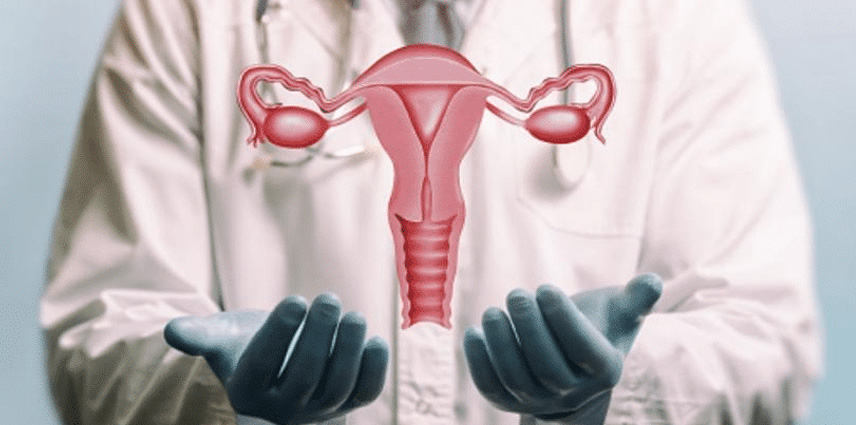
How we approach gynecological oncology in Thane
Gynecological cancers behave very differently from one another. An early cervical cancer, an endometrial (uterine lining) cancer and an advanced ovarian cancer each need a different surgical strategy, different scans and often a different combination of treatments. At the first visit, Dr. Yogesh Bansod reviews your biopsy, imaging and general health and explains what stage the disease appears to be and what that means for you.
Where it is appropriate, surgery is performed through minimally invasive techniques. For ovarian cancer that has spread within the abdomen, complete removal of visible disease, known as cytoreductive surgery, can be combined with HIPEC (heated chemotherapy washed through the abdomen) in selected patients. Surgical approach is always individualised: recent trial evidence has shown that the choice of technique matters for some early cervical cancers, so every plan is made against your own scans and not by routine.
Conditions we assess and treat
- Ovarian, fallopian tube and primary peritoneal cancer
- Endometrial (uterine) cancer
- Cervical cancer
- Vulval and vaginal cancer
- Gestational trophoblastic disease
- Suspicious ovarian cysts and masses needing surgical opinion
- Recurrent gynecological cancers
Symptoms that need a specialist opinion
- Bleeding after menopause or bleeding between periods
- Bleeding after intercourse
- Persistent bloating, a feeling of fullness or abdominal swelling
- Pelvic pain or pressure lasting more than a few weeks
- Unusual or foul-smelling vaginal discharge
- Frequent urination or constipation that is new for you
- Unexplained weight loss or tiredness
Having one of these does not mean you have cancer. It means you should have it checked by a specialist.
How the diagnosis is made
- Pelvic examination, Pap smear and HPV testing where relevant
- Ultrasound, CT, MRI or PET-CT
- Endometrial biopsy, colposcopy-guided biopsy or image-guided biopsy
- Blood markers such as CA-125 for suspected ovarian disease
- Tumour board discussion for staging and treatment sequence
Surgical procedures for gynecological cancers
The right operation depends on the type of cancer, its stage and whether you hope to have children. Where it is as safe as open surgery, minimally invasive surgery (laparoscopic or robotic) is used. For some cancers, particularly early cervical cancer, open surgery gives better cancer results, and the approach is chosen on that evidence and not on convenience.
Hysterectomy with removal of both ovaries and tubes
The core operation for endometrial (uterine) cancer and an important part of treatment for ovarian cancer. Removal of the uterus, ovaries and fallopian tubes is combined with washings from the abdomen so that the stage is known accurately. Minimally invasive techniques are commonly suitable for endometrial cancer.
Sentinel node mapping and lymph node dissection
Nodes in the pelvis, and where required beside the main blood vessels in the abdomen, are checked to see whether the cancer has spread. Sentinel node mapping can often spare you a full dissection and lowers the risk of leg swelling (lymphoedema).
Radical hysterectomy for cervical cancer
For early cervical cancer, removal of the uterus, the tissue beside the cervix, the upper vagina and the pelvic lymph nodes. Recent trial evidence has shown that the open approach gives better cancer outcomes than keyhole for most early cervical cancers, so we plan this individually with you.
Primary and interval cytoreductive surgery for ovarian cancer
The goal is to remove every visible deposit of cancer. This can mean removing the uterus, both ovaries and tubes, the omentum (a fatty apron in the abdomen), deposits on the abdominal lining and, if needed, a part of the bowel. It is done either at the start of treatment or after three or so cycles of chemotherapy (interval surgery). Leaving no visible disease behind is one of the strongest surgical influences on long-term results. In selected patients, HIPEC may be added.
Fertility-sparing surgery
In a small group of young women with very early disease, it may be possible to remove only the affected ovary and tube, or to remove the cervix and keep the uterus, and so preserve the chance of pregnancy. We assess honestly whether this is safe for your cancer type and stage.
Vulvar and vaginal cancer surgery
Wide local excision or vulvectomy with assessment of the lymph nodes in the groin, using sentinel node biopsy in selected patients. Reconstruction is planned where needed, with plastic surgery colleagues.
Surgery for recurrent disease and risk-reducing surgery
Selected women whose ovarian or other gynecological cancer has returned in a limited area may benefit from a second operation. Women with a BRCA gene change may be advised to have the ovaries and tubes removed to lower their risk, which we discuss together with genetic counselling.
Recovery depends on the operation. After keyhole surgery many women go home within a few days. After major cytoreductive surgery the stay is longer. We explain the likely recovery, effects on hormones and menopause, and the role of chemotherapy before you decide.
Advanced ovarian cancer with spread inside the abdomen?Read about cytoreductive surgery and HIPEC, and who may benefit.Treatment options with Dr. Yogesh Bansod
Staging and radical surgery
Hysterectomy, removal of ovaries and tubes, lymph node assessment and complete staging for uterine, cervical and ovarian cancers.
Minimally invasive options
Laparoscopic and robotic-assisted surgery for suitable early-stage cancers, chosen case by case.
Cytoreductive surgery and HIPEC
Removal of all visible disease in advanced ovarian cancer, with heated intraperitoneal chemotherapy for selected patients.
Fertility and hormone questions
If you are young and wish to preserve fertility, we discuss whether that is oncologically safe before any decision is made.
Coordinated oncology care
Chemotherapy, targeted therapy and radiotherapy are planned together with your medical and radiation oncologists.
Cancer care close to home in Thane
Many women in Thane, Mulund and Dombivli delay a gynecological consultation because of the travel involved or because they are unsure who to see. A consultation in Thane puts a surgical oncologist within reach for a first opinion, review of your ultrasound or biopsy, and a clear plan before you commit to treatment. Women are welcome to bring a family member, and consultations are unhurried.
Frequently asked questions
Which doctor treats ovarian cancer in Thane?
Ovarian cancer is best managed by a surgical oncologist working with a medical oncologist. Dr. Yogesh Bansod offers cytoreductive surgery and, in selected patients, HIPEC. A consultation will clarify what applies to your situation.
Is surgery always the first step in cervical cancer?
No. Very early cervical cancers are often treated with surgery, while locally advanced disease is usually treated with chemoradiation. Your scans and examination decide the route, and the tumour board confirms it.
Can I still have children after gynecological cancer surgery?
In a small group of young women with very early disease, fertility-sparing surgery may be possible. This depends on the cancer type and stage and must be discussed before treatment begins.
What does HIPEC involve for ovarian cancer?
After the surgeon removes all visible tumour, a warmed chemotherapy solution is circulated inside the abdomen for a set time. It is considered only for carefully selected patients and is not appropriate for everyone.
I have post-menopausal bleeding. Should I be worried?
It should always be evaluated, although most causes are not cancer. A simple ultrasound and endometrial sampling can usually clarify the cause quickly. Please do not wait for it to settle by itself.
This page is for general information and is not a substitute for personal medical advice.